US vs UK Crochet Terms: A Simple Conversion Chart
This is the one that catches everybody out. You follow a pattern carefully, every stitch count is right, and the finished piece is twice as tall as the photo. Nothing went wrong with your crochet — you used US terms on a UK pattern, or the other way round.
The two systems use the same words and the same abbreviations for different stitches. They are offset by one step: a UK name describes the stitch one level taller than the US name does.
The conversion chart
- US slip stitch (sl st) = UK slip stitch (ss)
- US single crochet (sc) = UK double crochet (dc)
- US half double crochet (hdc) = UK half treble (htr)
- US double crochet (dc) = UK treble (tr)
- US treble / triple crochet (tr) = UK double treble (dtr)
- US double treble (dtr) = UK triple treble (trtr)
Note what this means in practice: dc exists in both systems and means something different in each. A UK dc is the shortest stitch; a US dc is three times as tall. That one abbreviation causes most of the confusion.
How to tell which set a pattern is using
Most patterns say so, usually right under the materials list. When one does not, there are reliable clues.
- The pattern uses 'sc'. It is US terms. 'Single crochet' does not exist in the UK system at all — this is the quickest test there is.
- The pattern uses 'htr'. It is UK terms. The US system has no 'half treble'.
- 'dc' appears everywhere and 'sc' never does. Almost certainly UK, where dc is the workhorse stitch.
- Yarn weights are given in US names (worsted, sport, fingering) or hooks in letter sizes (H-8, J-10). Strong signal for US terms.
- Yarn is given in UK names (aran, double knitting, 4-ply) and hooks in millimetres only. Leans UK.
- Spelling. 'Color', 'gray' and 'yarn over' point to US; 'colour', 'grey' and 'yarn round hook (yrh)' point to UK.
If two clues disagree, trust 'sc' and 'htr' over everything else. Those two abbreviations only exist in one system each.
Converting a pattern
Converting is a straight substitution, but do it on paper before you pick up the hook. Print the pattern, work through it line by line and write the replacement above each abbreviation. Then crochet from your marked-up copy.
Three things to watch while you convert:
- Turning chains change too. A taller stitch needs a taller turning chain — one for a US sc, two for hdc, three for dc. Convert those alongside the stitches.
- Special stitches are usually written out. Clusters, shells, puffs and bobbles are normally described step by step in the pattern itself, so they convert with the stitches they are built from.
- Stitch counts do not change. If a round has 48 stitches in UK terms it has 48 in US terms. If your count changes, the conversion went wrong somewhere.
Does the hook size change?
No. Hook sizes are physical — a 4 mm hook is 4 mm everywhere. What differs is the labelling: the US uses letter and number sizes (G-6, H-8, J-10), the UK and most of Europe use millimetres. A pattern that asks for an H-8 wants a 5 mm hook. When a pattern gives both, use the millimetre figure, because the letter conversions vary slightly between manufacturers.
A note on our patterns
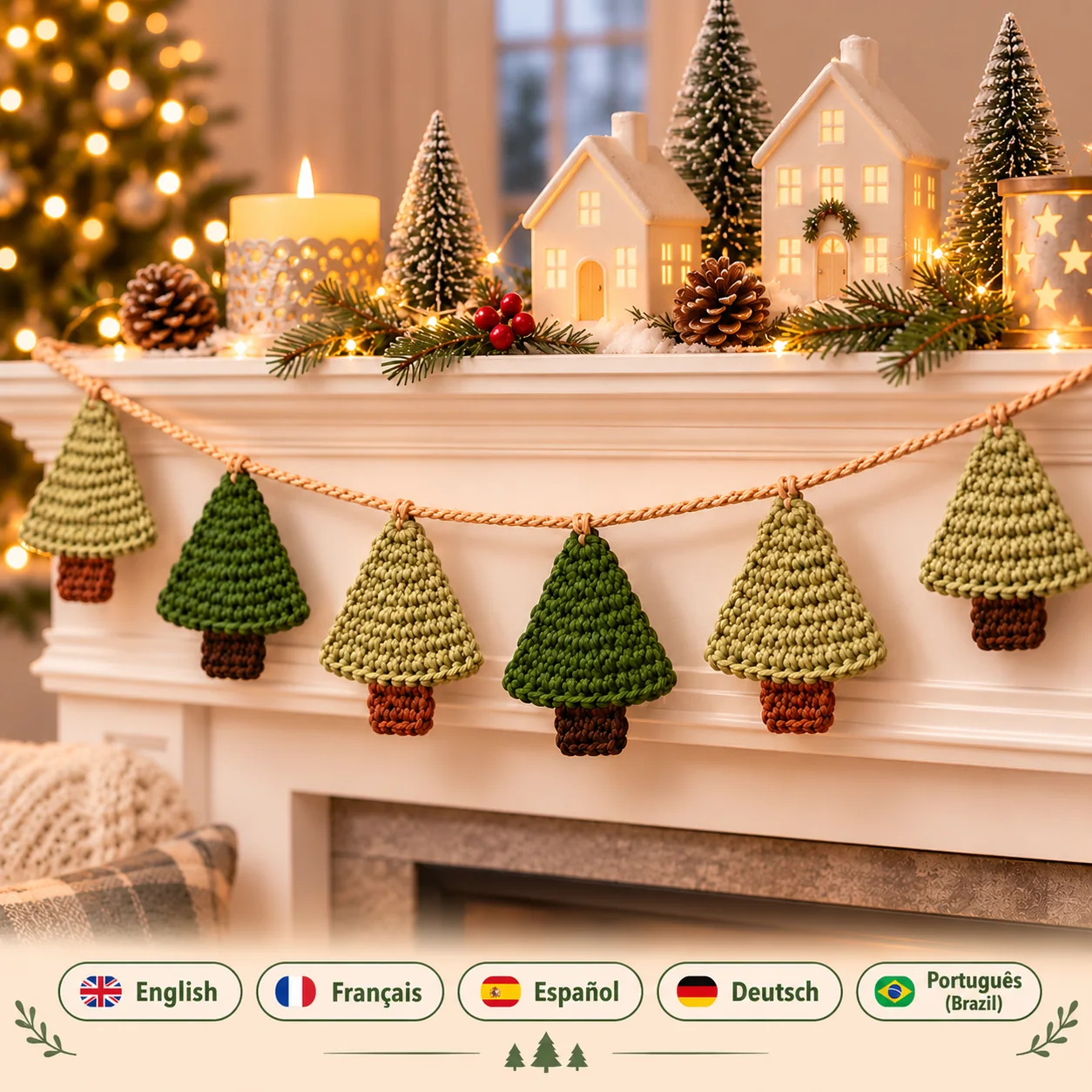
Every Crochet Corner pattern is written in US terms, and each pattern page lists this under 'Crochet terms' along with a full abbreviations table inside the PDF. If you normally work in UK terms, the chart above is all you need — or start with a beginner-friendly one like the Rustic Tree Garland, which uses only chain, slip stitch and single crochet, so there are just two conversions to remember.
Keep this handy
Write the six lines of the chart on an index card and keep it in your project bag. After a few patterns you will stop needing it — but the first time you open a pattern from the other side of the Atlantic, it will save you an afternoon.
Patterns From This Guide
Printable PDF patterns, instant download after checkout.
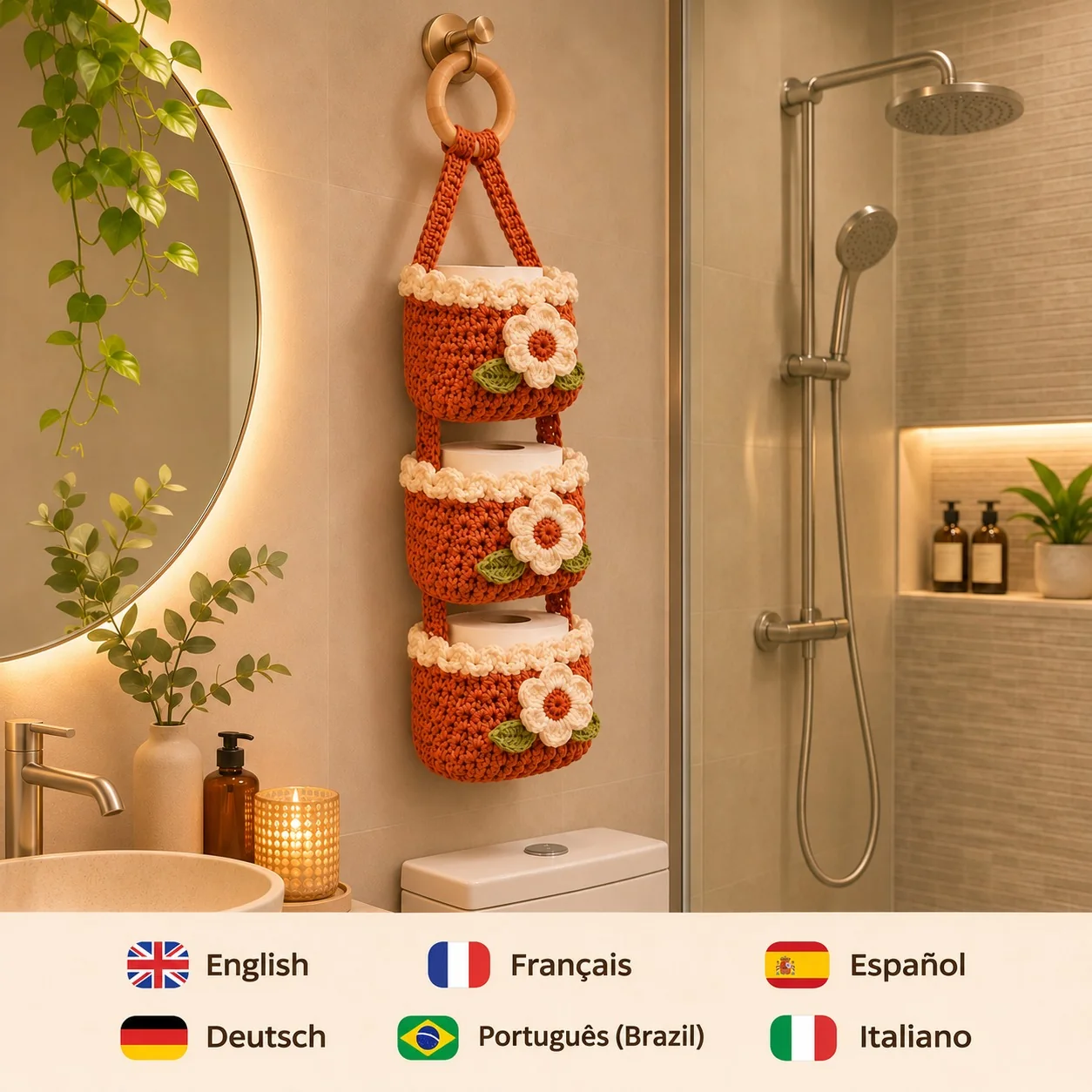
Terracotta Bloom Hanging Toilet Paper Holder Crochet Pattern
Sale price $9.99 Regular price $12.49