Best Yarn for Crochet Bags (And What to Avoid)
A bag is one of the few crochet projects that has a job to do. A blanket only has to look good; a bag has to hold a laptop, a water bottle and a bag of groceries without turning into a long sad triangle by the end of the month. Most of that comes down to the yarn you pick before you make the first chain.
Here is what actually matters, and which yarn to reach for.
The one property that decides everything: stretch
Fibres differ in how much they give under load, and a crochet bag puts load on every stitch near the handles. Yarn that stretches will stretch, slowly, and it does not spring back. That is the whole story. Pick a fibre with low stretch and your bag keeps its shape for years; pick a stretchy one and it will sag no matter how neat your stitches are.
Ranked from least to most stretchy: ribbon and t-shirt yarn, cotton, cotton blends, acrylic, wool.
Cotton: the safe default
Cotton is the standard choice for bags for good reason. It has almost no memory, so it holds the shape you give it. It is strong, it washes, and it comes in every weight. Mercerized cotton has been treated to be smoother and stronger with a slight sheen, and it is excellent for bags that need to look finished rather than rustic.
The downside is weight. A big tote in worsted cotton is heavy before you put anything in it. For a large bag, consider a DK or sport weight cotton worked at a tight gauge rather than a bulky one.
Ribbon yarn: structure without the work
Ribbon yarn is a flat tape rather than a round strand. It creates a thick, firm fabric very quickly, and because it is flat it lies against itself and resists stretching. Held double it gives a bag that is genuinely stiff enough to stand up on its own.
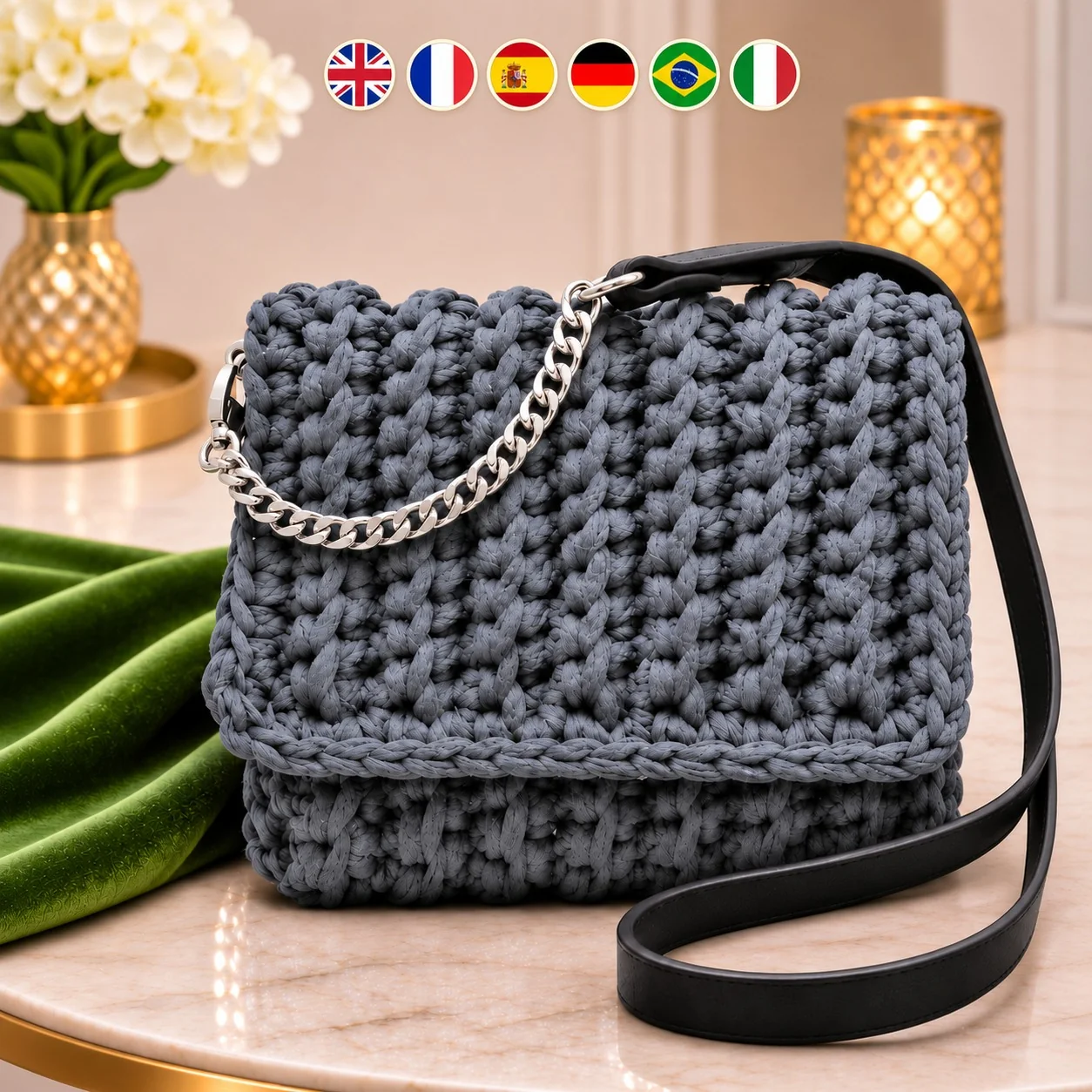
This is what the Rib Clutch uses: two strands of ribbon yarn held together on a 9 mm hook, worked in single crochet through the back loop only. That combination — flat yarn, doubled, big hook, ribbed stitch — is why a flat rectangle folds into a clutch that keeps its edges.
T-shirt yarn: fast, sturdy, heavy
T-shirt yarn (jersey yarn) is cut from knitted fabric. It is very thick, so a market bag takes an evening instead of a week, and the finished fabric is dense and hard-wearing. It is also heavy and hard on your hands and wrists, and the colour range is limited. Good for market totes and floor baskets; poor for anything you want to look delicate.
Blends: the middle ground
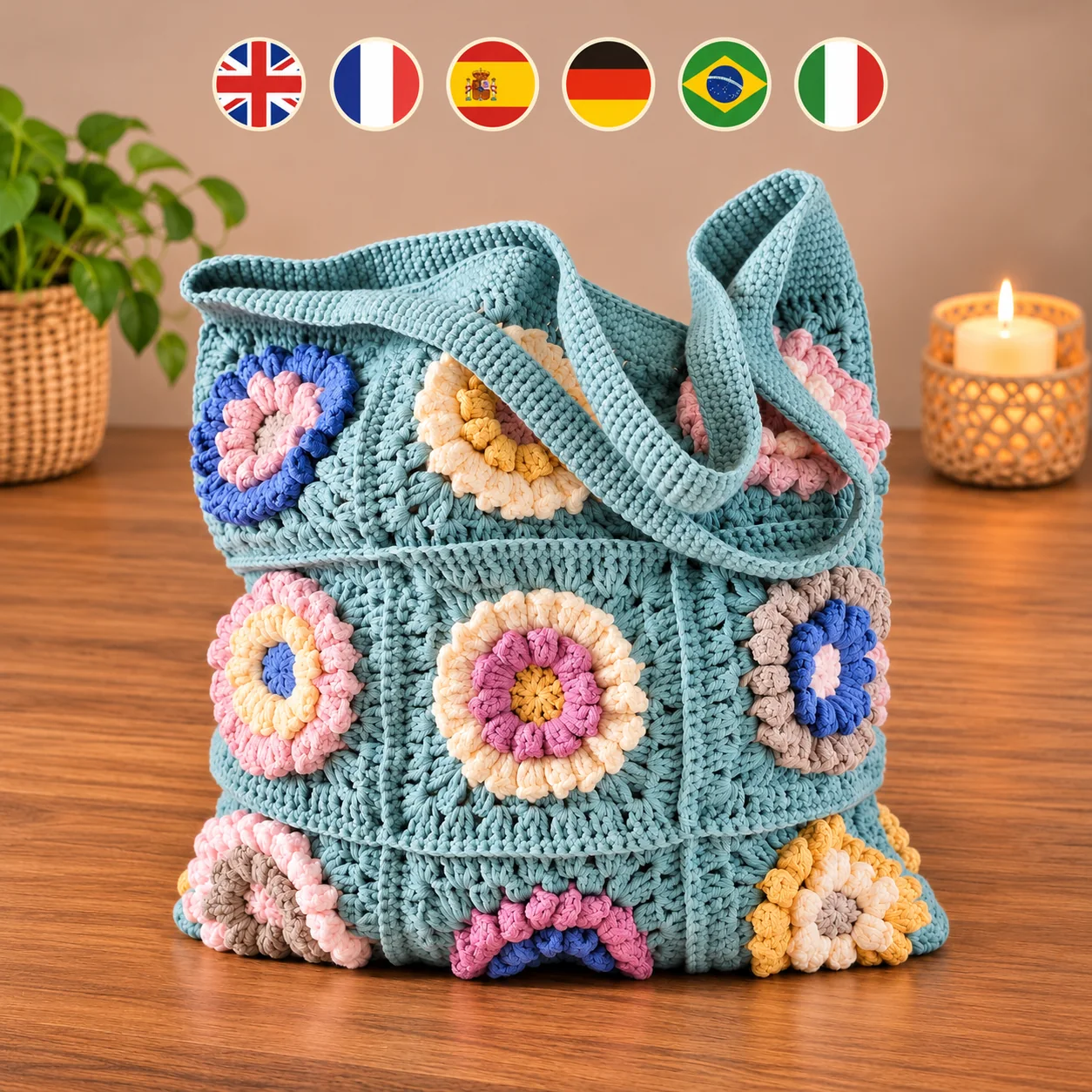
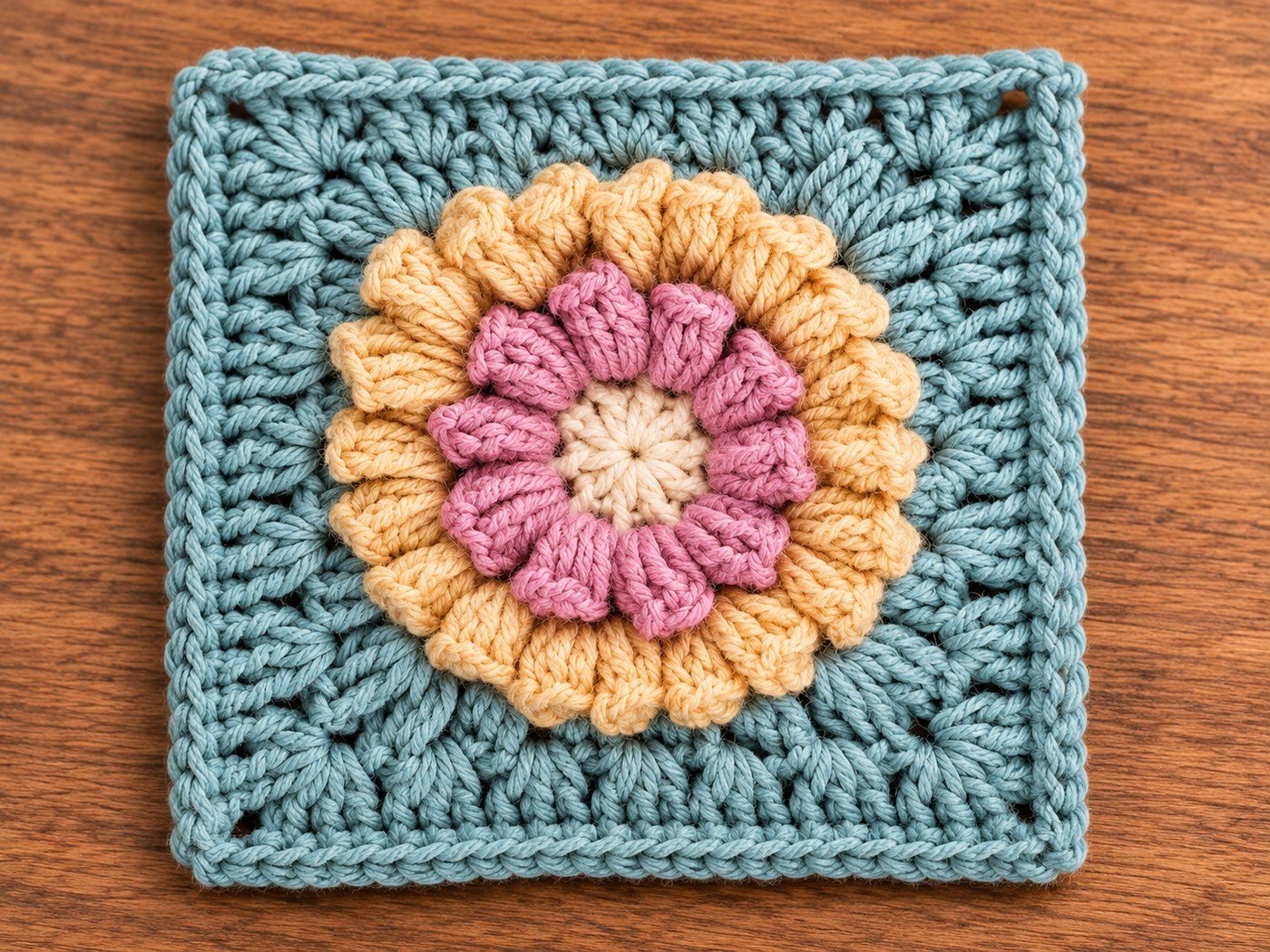
A cotton and acrylic blend gives you most of cotton's structure with less weight and a softer feel, and it is usually cheaper. The Spring Meadow Tote Bag is worked in a 51% acrylic, 49% cotton yarn for exactly this reason — the eighteen granny squares stay crisp, but the finished tote is light enough to carry all day.
What to avoid
- Soft acrylic. The thing that makes acrylic lovely for blankets — its springiness — is the thing that ruins bags. It stretches under weight and never recovers.
- Wool, unless you plan to felt the bag on purpose. Untreated wool stretches and can felt by accident in the wash.
- Chenille and velvet yarns. They look wonderful and they wear badly: the pile rubs off at stress points and the strand worms out of the stitches.
- Single-ply anything. It pulls apart at the handles.
Gauge matters as much as fibre
Even the right yarn will sag if you work it loosely. For bags, go down one or two hook sizes from what the ball band suggests. The fabric should feel firm and a little stiff, with no daylight between the stitches when you hold it up. It will feel too tight in your hands and exactly right once it is a bag.
A quick test: crochet a swatch about 10 cm square at your chosen gauge, hold it by one edge and let it hang. If it visibly lengthens, your bag will too.
How much yarn will you need?
Bags eat more yarn than people expect because the fabric is dense. As a rough guide, a medium tote in worsted cotton takes 500–700 g, a small shoulder bag 200–300 g, and a clutch or pouch 100–350 g depending on the yarn's thickness. Always buy one more ball than you think, and check the dye lot — a colour shift halfway up a flat panel is very visible.
Matching yarn to project
- Market tote, groceries, books: worsted cotton or t-shirt yarn, tight gauge.
- Everyday shoulder bag: DK cotton or a cotton blend, with a lining.
- Clutch or evening bag: ribbon yarn held double, or mercerized cotton.
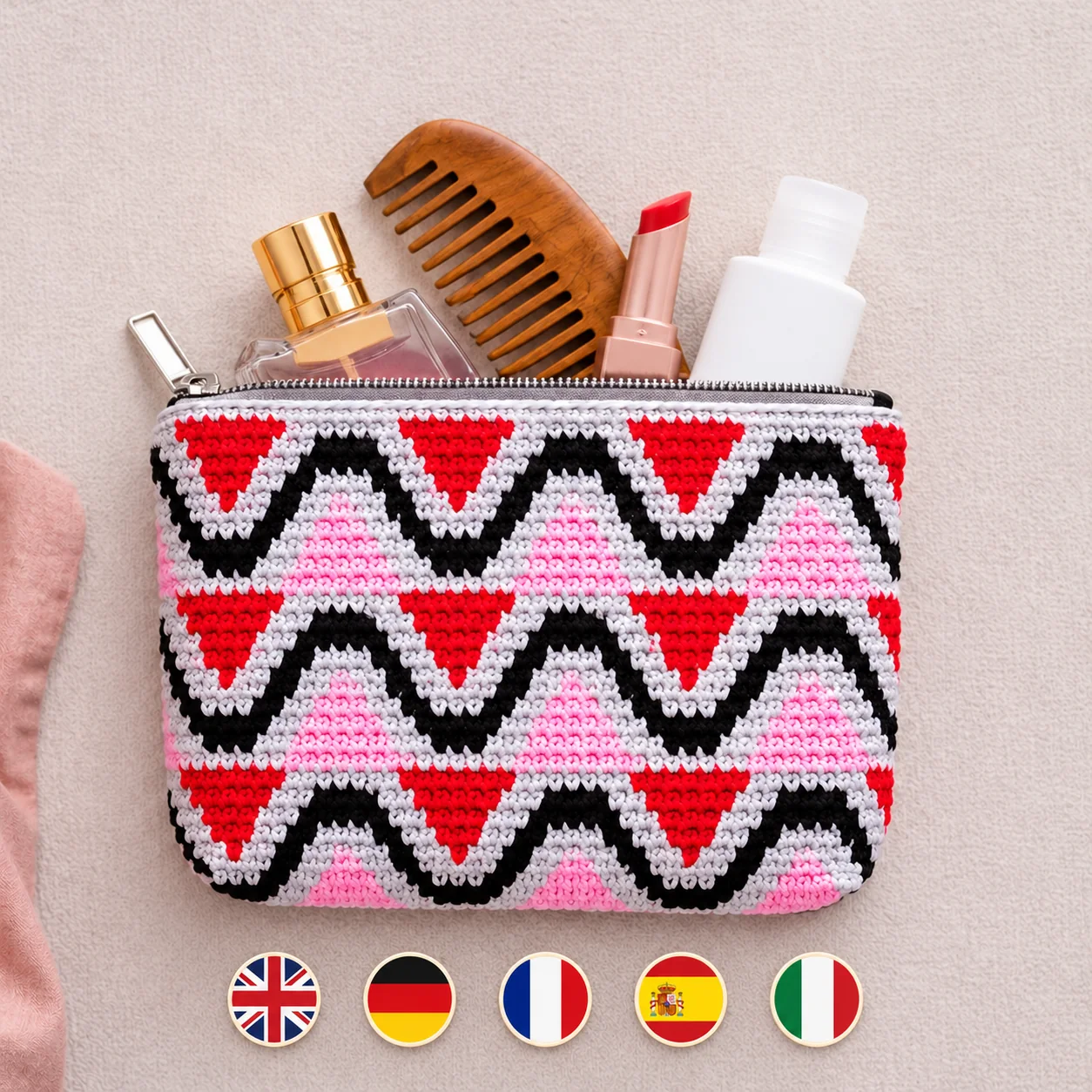
- Zip pouch or cosmetic bag: fine cotton in a colourwork technique — the Ava Cosmetic Pouch uses 8/4 cotton in four colours for its tapestry zigzag.
- Beach bag: raffia or paper yarn, which shrug off sand and sun.
The short version
Choose cotton, a cotton blend, ribbon yarn or t-shirt yarn. Work it tighter than the ball band says. Skip soft acrylic and untreated wool. Do those three things and the bag you finish this month will still look like a bag next year.
Patterns From This Guide
Printable PDF patterns, instant download after checkout.